
Perspective · Jul 15, 2026 · Braxton Warren
They Call Him an Abuser. Here Is What I Actually See at NERD.
Kevin McCurley gets called a reptile abuser by people on the internet because some of his animals live in rack systems. I have stood in that building. This is what the accusation gets wrong — and why the outrage hurts the animals it claims to defend.

here is a comment that shows up under almost everything Kevin McCurley posts. The wording changes, but the shape is always the same: animals in drawers, animal abuser, shut it down. It costs the commenter three seconds. It ignores forty years of work. And I want to walk through, calmly, why the people who actually know this field do not see it that way.
First, what the accusation is actually pointing at. NERD is a working facility — one of the most established reptile facilities in the country. Part of it is display and education. Part of it is a breeding operation, and breeding operations use rack systems: organized banks of enclosures purpose-built for the terrestrial snakes that live in them. To an unfamiliar eye scrolling past a photo, a rack reads as a filing cabinet, and the outrage writes itself. But husbandry is not judged by what a setup looks like to a stranger — it is judged by how the animals in it are doing.
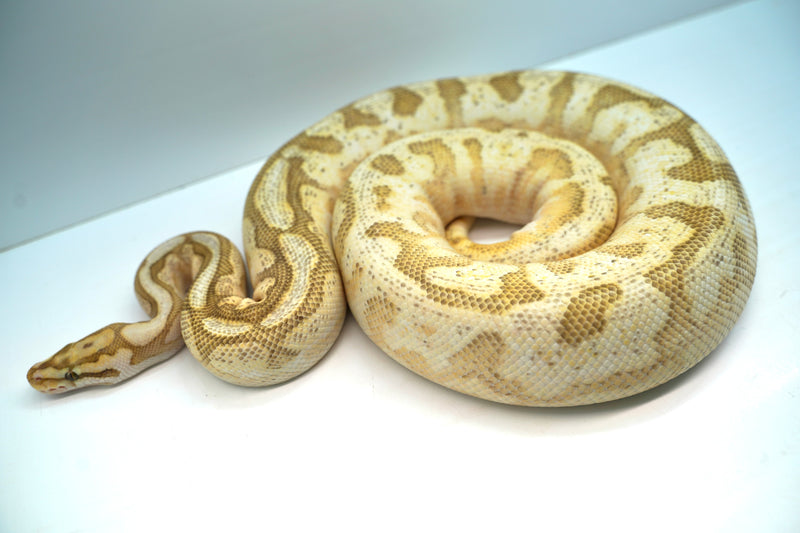
So look at the animals. Feeding responses, body condition, clean sheds, longevity, and — the measure that is hardest to fake — consistent, healthy reproduction across decades. Chronically stressed, suffering animals do not thrive, and they certainly do not reproduce reliably generation after generation. The condition of the collection is the record, and anyone who has stood inside that building has seen it: animals that are calm, heavy-bodied, alert, and demonstrably comfortable with the person the internet calls their abuser.
Second, consider what the accusation assumes: that the accuser knows what a ball python or a blood python wants better than the people who have spent their lives producing, raising, and studying them. A terrestrial ambush snake is not a dog. Its priorities are security, a correct thermal gradient, and predictable access to food and water. I will let the next note dig into the husbandry science of racks properly — but the short version is that a well-run rack delivers those priorities extremely well, which is exactly why healthy, long-lived, reproducing collections run on them.
Third — and this is the part I actually care about — the outrage is counterproductive for animal welfare itself. Every experienced keeper who gets dogpiled learns the same lesson: stop showing your work. The people with the deepest practical knowledge in this field go quiet, stop posting husbandry content, stop teaching in public. The information that would actually improve animal care gets driven underground by people who believe they are defending animals. If your activism makes the best keepers hide what good husbandry looks like, you have not protected a single snake — you have just made the average keeper worse.
None of this means every rack is good husbandry, any more than every aquarium is good fishkeeping. Bad keepers exist in every format, and undersized, unheated, neglected setups deserve criticism — specific criticism, aimed at actual conditions. What I am pushing back on is the reflex that equates a format with abuse while ignoring the only evidence that matters: the animals.
Kevin has spent his life putting reptiles in front of people — teaching, publishing, building one of the collections that defined modern herpetoculture. You are welcome to walk into NERD and look at every animal in the building; it is open to the public, which is not the behavior of a man hiding something. Judge the animals, not the aesthetics. That is the whole ask.
Braxton Warren · The Weekly Note
A new note lands every week.
Thirty-plus years of keeping, breeding, and reading these animals — written down, one note at a time.